Cape Town’s City Centre remains one of South Africa’s most important office markets, but looking at the CBD as a single commercial node can be misleading. Different parts of the city centre appeal to different occupiers, offer different types of buildings and provide substantially different working environments.
The Foreshore is characterised by larger corporate buildings, modern office towers and easier access to the N1 and N2. The traditional CBD around Adderley, Long, Loop and Bree Streets offers a much broader range of office grades and rental levels. Towards Strand Street and De Waterkant, newer mixed-use developments have created another office precinct combining commercial space with residential, retail and hospitality uses. Understanding these differences has become increasingly important for companies comparing office options in central Cape Town.
The overall Cape Town office market also remains relatively tight compared with South Africa’s other large metropolitan markets. SAPOA data reported by the Cape Town Central City Improvement District showed a Cape Town metro office vacancy rate of 6.2% at the end of Q2 2026. Within the CBD itself, vacancy stood at 11.9%. However, availability is not evenly distributed across different grades of accommodation, with stronger demand being recorded for higher-quality offices with parking, amenities and good transport access.
The Cape Town CBD Office Market in 2026
The City Centre remains a substantial office market. At the end of 2025 the CBD contained approximately 1.058 million m² of office accommodation, accounting for around 39% of Cape Town’s total office stock. For businesses considering office space to rent in Cape Town CBD, this creates considerable choice, but the type and quality of available space varies significantly from one part of the city to another.
A notable change in the market has been the increasing focus on quality.
Businesses are looking beyond basic rental rates and considering factors such as:
- backup power and operational resilience;
- parking ratios;
- access to public transport;
- fitted versus white-box space;
- environmental performance;
- nearby restaurants and amenities;
- staff commuting patterns;
- floorplate efficiency; and
- the total occupancy cost of a building.
The CCID has reported particularly consistent demand for A- to P-grade office accommodation, particularly buildings offering adequate parking and amenities. Public transport access has also become an important consideration for larger employers and BPO operators with significant staff numbers. This has resulted in quite different market conditions depending on which section of the City Centre a business considers.
The Foreshore: Cape Town’s Corporate Office Precinct
The Foreshore represents the modern corporate end of the Cape Town CBD office market. Located between the traditional city grid and Table Bay, the precinct provides direct connections to the N1 and N2 and is close to Cape Town Station, MyCiTi services and other public transport routes. It is also home to several of Cape Town’s better-known corporate office properties.
Convention Tower
Convention Tower is one of the most recognisable premium office buildings on the Foreshore. Its position alongside the Cape Town International Convention Centre makes it particularly relevant to companies requiring a high-profile corporate address with convenient access for clients and international visitors. The building has also become significant from an environmental perspective. In 2026 the CCID highlighted Convention Tower’s Net Zero Carbon Level 2 certification as an example of the changing environmental standards within Cape Town’s premium office market.
The Halyard
The Halyard on Christiaan Barnard Street offers modern office accommodation at the eastern side of the Foreshore. Its position provides access to both the CBD and the freeway network and makes it an option for companies that want a modern building without being positioned in the centre of the traditional CBD grid.
The Towers
The Towers precinct is another significant concentration of office accommodation within this part of Cape Town. Its location near Hertzog Boulevard provides straightforward access to public transport and the major routes entering and leaving central Cape Town. Other buildings across the wider Foreshore include offices around Lower Long Street, Hans Strijdom Avenue and the CTICC precinct.
For larger businesses evaluating office space to rent on the Cape Town Foreshore, the area generally warrants separate consideration from the traditional CBD because its building stock, access, parking and floorplates can be substantially different.
Adderley Street and the Traditional CBD Core
Moving further into town brings businesses into Cape Town’s traditional commercial core. Adderley Street and the surrounding blocks have historically accommodated banks, professional firms, government offices and corporate occupiers. Properties such as 11 Adderley Street provide comparatively large office floorplates in an extremely central location. The area has one major advantage for businesses with employees dependent on public transport: Cape Town Station, taxi services and MyCiTi connections are within walking distance. The precinct can therefore work particularly well for organisations with high staff numbers.
This includes:
- BPO and contact centre operations;
- financial services;
- legal businesses;
- training organisations;
- government-related organisations; and
- larger professional service companies.
Office accommodation ranges from older secondary stock through refurbished A-grade buildings, which means businesses can compare a broad range of rental levels within a relatively small geographical area.
Long Street and the Legal and Professional Services Precinct
The blocks surrounding Long Street, Loop Street, Queen Victoria Street and the Western Cape High Court form another distinct section of the office market. This remains an established location for legal practices, advocates, consulting businesses and professional services companies. Buildings include The Pinnacle, 14 Long Street, One Thibault and numerous smaller commercial properties.
One of the benefits of this part of Cape Town is the concentration of supporting amenities. Restaurants, coffee shops, hotels and other services are available throughout the surrounding streets. Buildings also vary considerably in size. See more about our transactional services. A company can find anything from a relatively small professional office occupying part of a floor through to large multi-floor requirements. That variety continues to make this section of the CBD relevant to companies that want a central Cape Town address without necessarily requiring a premium Foreshore office tower.
St Georges Mall and the Pedestrian CBD
Around St Georges Mall the nature of the City Centre changes again. Properties such as 32 St Georges Mall benefit from one of Cape Town’s main pedestrian routes, connecting the station precinct with the central business district. This part of the CBD can work particularly well for professional businesses that value public transport accessibility and proximity to restaurants, retail and everyday services.
It also illustrates an important feature of Cape Town’s office market: two buildings located only a few blocks apart can offer completely different environments. For occupiers, assessing the immediate precinct is therefore as important as assessing the building itself.
Bree Street, Loop Street and Cape Town’s Mixed-Use Office Market
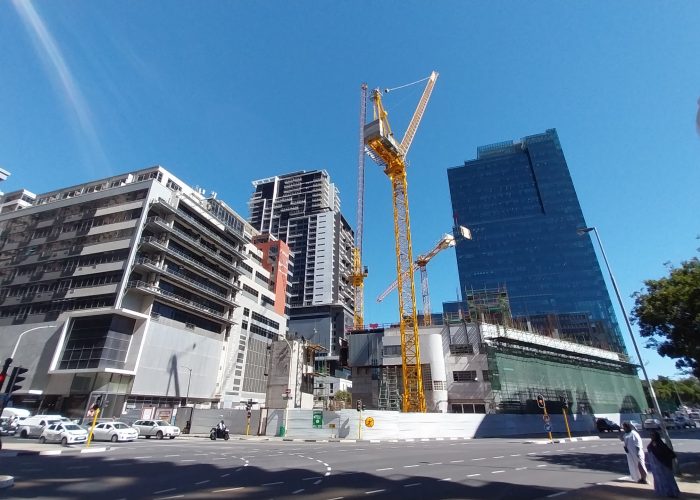
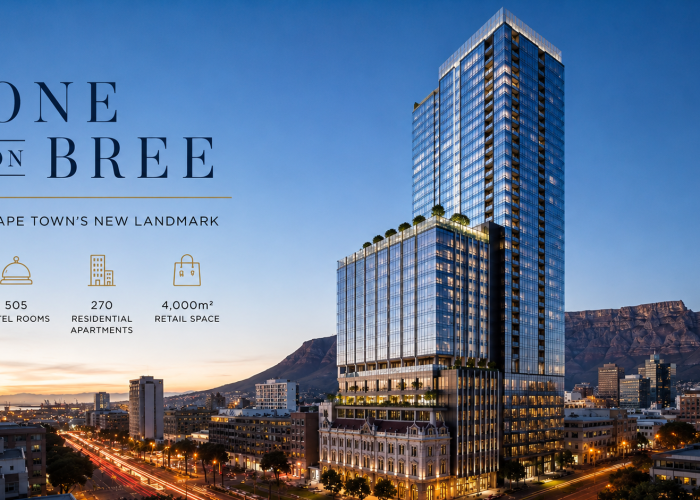
Bree Street and Loop Street have changed considerably over the past decade. While both remain important commercial streets, residential development, hospitality and restaurants have created a more mixed-use environment. Office Space Optimisation. Office buildings such as 29 Loop Street sit alongside converted heritage properties, apartments, hotels, restaurants and newer developments.
This environment can appeal to creative businesses, technology companies, consulting firms and professional services organisations looking for something different from a conventional corporate office park. There is also continuing investment in older CBD buildings.
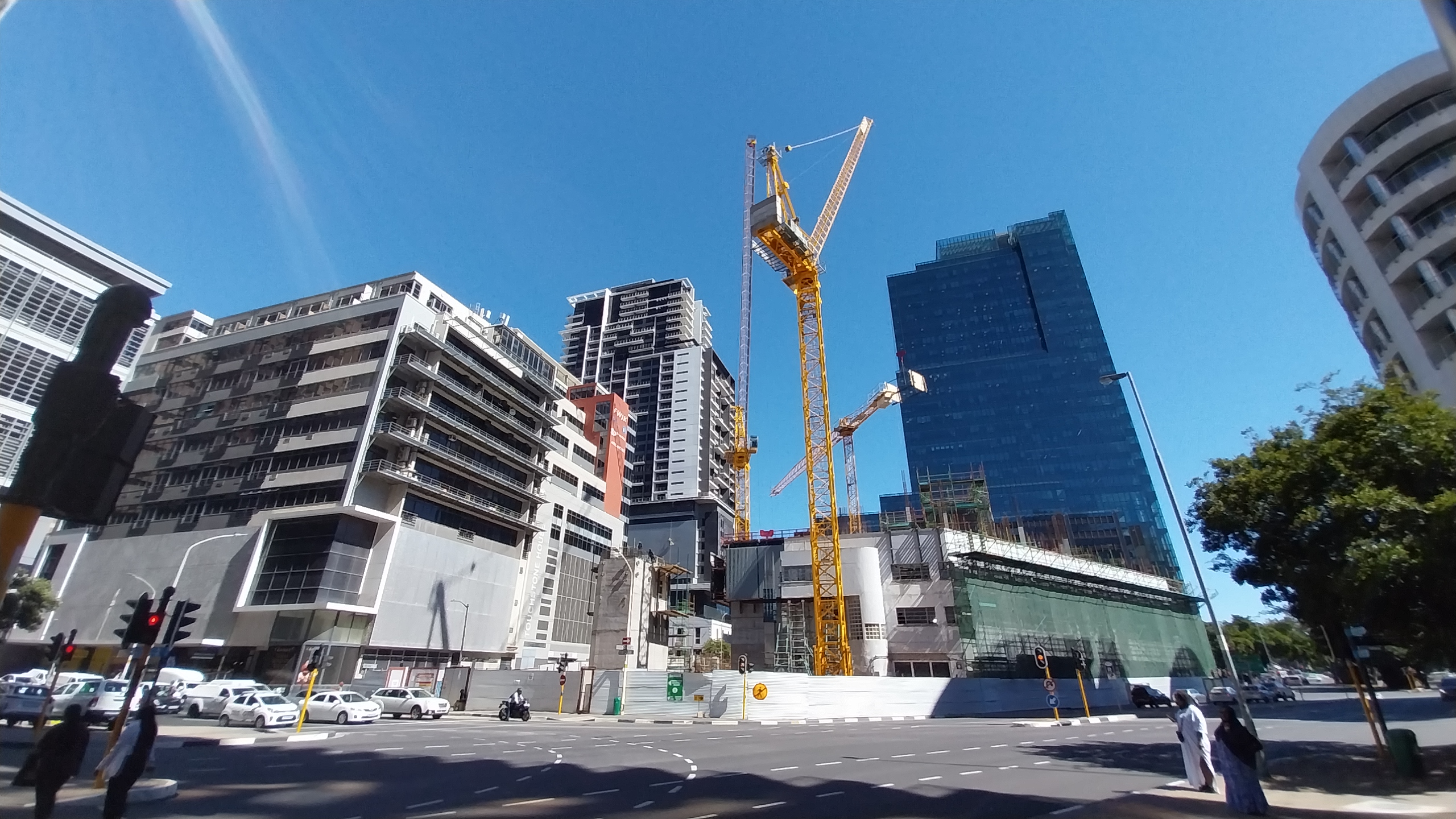
The current commercial development pipeline includes renovations and repositioning projects in Bree Street, Loop Street and Buitengracht Street. The CCID reported in September 2026 that six purely commercial developments representing approximately R2.38 billion of investment were included in the CBD development pipeline, with additional commercial space forming part of mixed-use projects.
Strand Street and the De Waterkant Edge
The western side of the CBD around Strand Street provides another office environment. Buildings such as 117 on Strand have introduced modern mixed-use accommodation combining offices with residential, retail and other facilities. The area also provides convenient access to De Waterkant and the V&A Waterfront.
For businesses whose employees or clients travel regularly from the Atlantic Seaboard, this side of the CBD may offer practical advantages over the eastern side of town. It can also appeal to companies seeking the amenities of the inner city while remaining within relatively easy reach of Waterfront and Green Point businesses.
Older Office Buildings Are Being Repositioned
Another significant change is taking place within older office stock. Not every older CBD building remains competitive as an office property. Some B- and C-grade buildings are being upgraded, while others are being converted to residential, hospitality or alternative uses. Industry participants interviewed by the CCID have highlighted this trend, particularly as demand becomes increasingly concentrated around better-performing A- and P-grade accommodation.
For office tenants, this can reduce the effective supply of certain categories of accommodation. Headline vacancy therefore does not necessarily tell a company how easy it will be to find a suitable office. A business requiring 1,500 m² with backup power, substantial parking, efficient floorplates and immediate occupation may have relatively few genuine alternatives even when overall CBD vacancy appears higher.
New Development Is Returning to the CBD
There are also signs that commercial development is becoming viable again. One of the proposed developments is The Matrix, planned for the intersection of Strand and Bree Streets. The development is intended to include P-grade office accommodation, retail space and substantial parking.
The redevelopment of the former Christiaan Barnard Hospital through the City Park project is another major mixed-use investment expected to introduce additional premium office accommodation. According to the CCID, demand for quality office space combined with constrained supply is supporting investment in both new buildings and major refurbishments.
This could gradually reshape the CBD office market over the next several years.
Choosing Between Cape Town’s CBD Sub-Nodes
The question for businesses is therefore not simply whether they should have an office in the Cape Town CBD. They should consider where within the CBD their business works best. A corporate occupier requiring larger floorplates, freeway access and a premium building may focus on the Foreshore.
A legal practice may place greater value on proximity to the High Court. A BPO operation may prioritise public transport and large efficient floors. A professional services company may prefer the mixed-use environment around Bree, Loop or Strand Street.
Businesses should compare:
Location and staff travel
Where employees live and how they travel to work can materially affect the suitability of an office.
Parking
Parking ratios vary considerably between CBD properties and can significantly affect total occupancy costs.
Public transport
Proximity to Cape Town Station, MyCiTi and taxi routes can be particularly important for businesses with larger staff complements.
Building grade
Premium and A-grade buildings generally provide better common areas, building systems, backup infrastructure and environmental performance but command higher rentals.
Existing fit-out
Taking over fitted accommodation can materially reduce capital expenditure compared with fitting a completely vacant office.
Lease incentives
Landlords may offer tenant installation allowances, rent-free periods or other incentives depending on the property, length of lease and tenant covenant.
Future growth
Companies should determine whether a building can accommodate expansion before committing to a longer lease.
Cape Town’s City Centre Remains a Diverse Office Market
Cape Town’s CBD should ultimately be considered a collection of interconnected office precincts rather than one uniform property market. The corporate buildings of the Foreshore offer a very different proposition from offices around Long Street, while the mixed-use developments around Bree, Loop and Strand Streets have introduced another type of workplace environment.
At the same time, continued investment, redevelopment of older buildings and demand for quality accommodation are changing the supply available to office tenants. For businesses considering a relocation, expansion or lease renewal, understanding these differences provides a better basis for comparing the market. Rather than beginning with a list of available properties, the process should begin by establishing the company’s operational requirements, staff profile, budget, parking needs, space requirements and preferred working environment.
Only then can the various Cape Town City Centre sub-nodes and buildings be compared on a meaningful basis.